

Routes
The secret sauce for setting ropes.

Ropes, a routesetter’s worst nightmare.
Think back to your first entry to the climbing gym. What stood out the most? It was the tall rope walls looming over the facility, holds winding their way to the top. Your first thought is, wow how am I going to get to the top of that? After climbing for a bit your next question might be, how’d they get all these holds up there?
With the increase in bouldering-only facilities in the past 5 years, many routesetters are opting out of setting routes completely, or moving through the industry without ever setting them at all. Setting routes is an undertaking. The intricacies go far beyond going up and down the ladder ramming your holds in with your impact driver. Proficient ropework, safety, hauling, and planning skills are invaluable to preserving your ability to keep ideas coming for 40, 50, or 60 feet.
We have been lucky to have many routesetters that consider themselves sport climbers instead of boulderers come through LIC’s doors over the years. This helped to establish us as one of the premier rope climbing gyms in the northeast. There are many facilities where ropes are an afterthought. They require more work and physical labor from the setters, so they get less attention. This means no volumes, no macros, and crimps galore. Are the routesetters to blame? Partially. Setting routes drastically lowers a routesetter’s career lifespan because of the strains on the body. Myself and many other routesetters have developed a myriad of tweaks from being suspended in a harness in bizarre positions for hours on end. Unfortunately, lifts aren’t commonplace in many gyms – they change the job completely (we finally got one after 8 years, and it’s a godsend). You have to be a masochist to want to haul hundreds of pounds of holds and volumes up the wall for 3-4 hours. However, we don’t think an entire subsect of the gym should receive less resources because of setting logistics.
Setting ropes starts with a mentality, and this is how we approach it.
Routes ≠ Boulders
Repeat after me. Routes are not boulders, routes are not boulders, routes are not boulders. It may seem obvious, but this fact is one that goes over the heads of many. “I want to set a v3 into a v5 into a v4, and that’ll be my route.” This is a conversation that occurs regularly amongst routesetters and is a simple way to contextualize the sections of a route. However, I think the more you think about a route in terms of a boulder problem, the more it starts feeling like one.
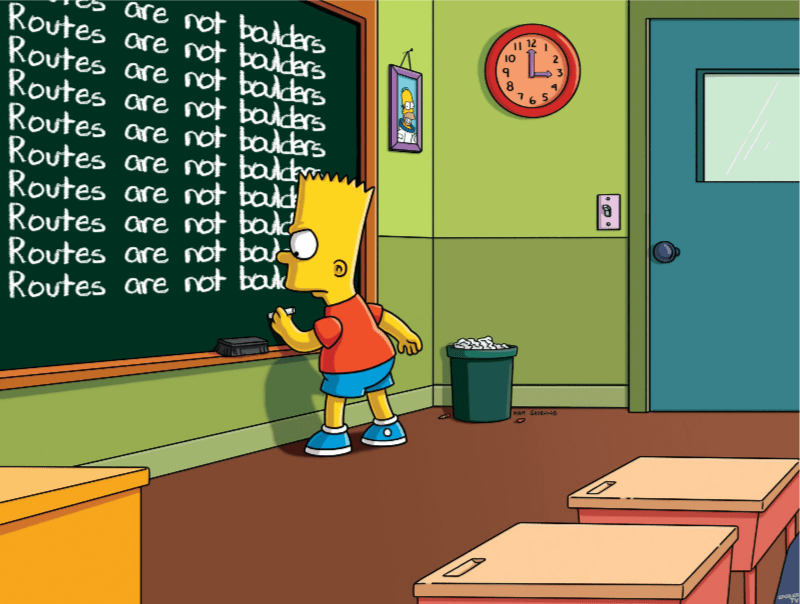
Creating a distinction between the two disciplines is something we have drawn a hard line on. We want them to feel different, because they are different. Climbers want them to feel different, because they are different.
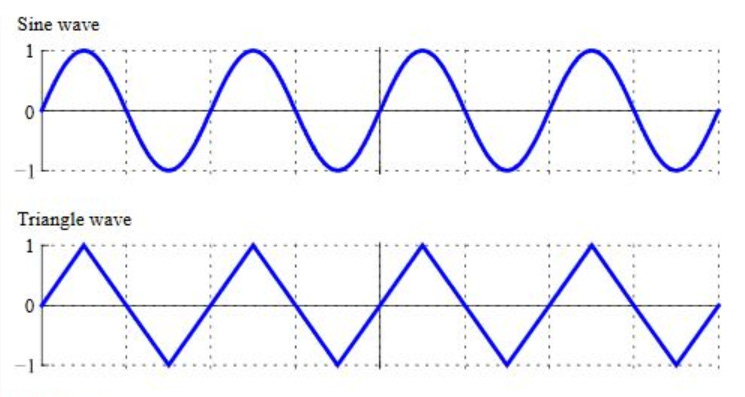
I’m not a math or sound guy, but waveforms give us some insight into the “feelings” that characterize routes and boulders. Routes are often more representative of a sine wave, where they feel clean, smooth, and natural. Boulders are more comparative to a triangle wave, offering more harshness and complexity. These attributes can key us into how we should approach setting each discipline.
Climbers want routes to ebb and flow, and difficulty spikes are a way to take climbers out of this flow state. Setting 5.11d into a v5 boulder into 5.10d is just as disjointing to climb as it is to read. The abrupt combination of multiple aspects into a single route doesn’t leave the climber with a feeling of a smooth ride, it leaves them driving on a bumpy road. If you are looking to add a “boulder problem” into your route, you are adding additional complexities into an already multi-layered equation.
Route progression should look something like this:
5.11a > 5.11c > 5.12a > 5.11d > 5.12b
There are peaks and valleys, but no spikes. You allow the climber to get acclimated, guide them into the meat of the climb, and give them a breather before the final crux. Every move is not going to be interesting, but rather a building block that is critical to conveying the entire experience. It becomes easier to compartmentalize difficulty when you say: this is the hardest move on the route vs. this move feels like v5. Don’t draw parallels to an ambiguous grade, see if difficulty makes sense within the context of what you are climbing.
Bigger the Better
Nothing like hauling up a light bucket full of crimps. Choosing small holds makes our job way easier, but does it generate a great product? I don’t think so.
If you have visited or do a quick Google search of some of the rope gyms across the US, you’ll find this is the product that many gyms are putting forward, even when some of them even have lifts at their disposal. Why is this? It’s a pain to get big holds on the wall. Sans lift, you will be required to set up hauling and directional systems to get large volumes on the wall, sometimes needing two people and multiple tether systems depending on the volume. If you want to use large plastic or fiberglass shapes, multiple trips with heavy buckets to finish a single route will be your fate. With a lift, it can still be draining loading large volumes and holds, and then being responsible for putting them up solo.
I’m in a fortunate position to have (some) flexibility with our team’s quota. This is not the case for setters at many other gyms, so production comes before quality. If you spend more than half of your allotted setting time on a volume and macro heavy route, it isn’t pleasant coming down beaten up and then having to set yet another route. This leads to a “just get it over with” mentality, less macros, and no volumes.
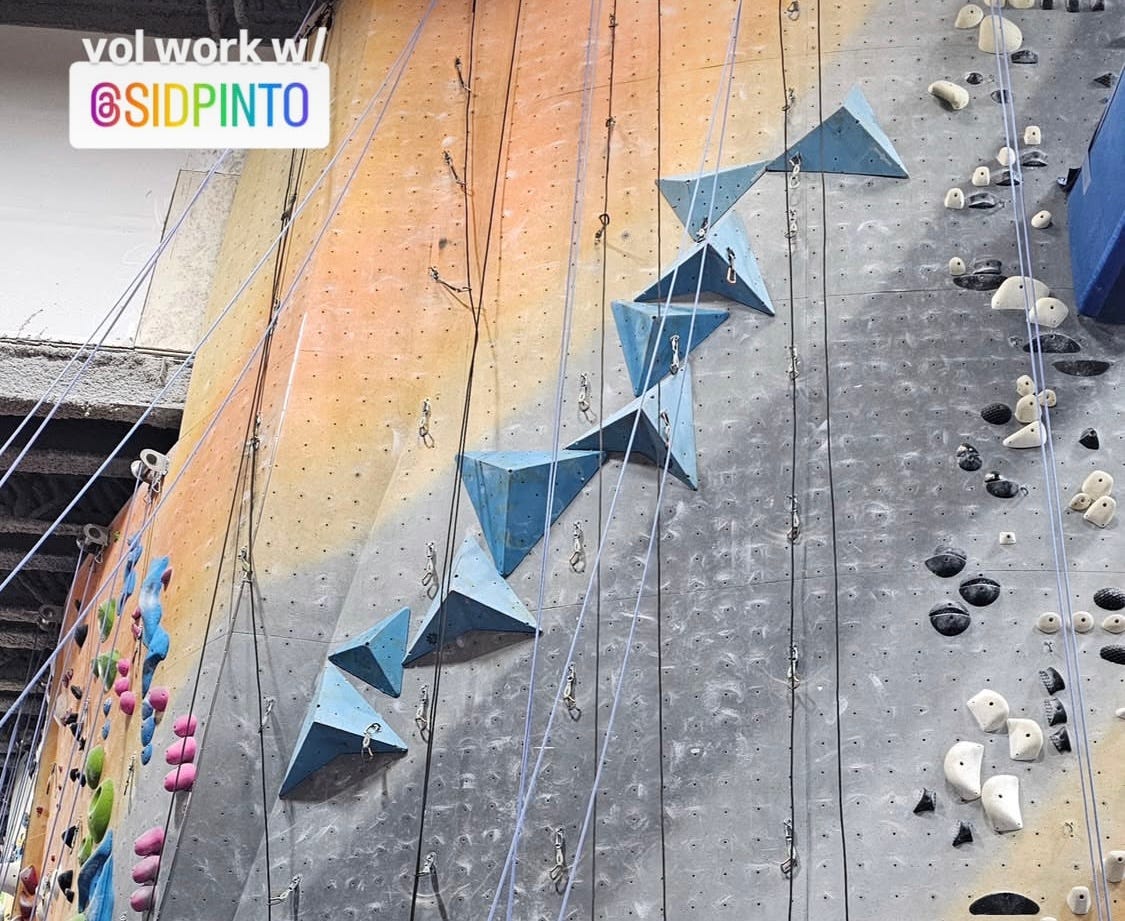
Why is it important to get big holds and volumes on the wall? It changes monotonous terrain. Modern gyms are increasingly being designed with fewer angle changes for easier setting. This is a net positive if setters do their due diligence to modify these consistent angles with macros. Pulling on crimps for 40 feet can be fun, but if it extends to 50% of the routes in the gym it begins to feel stale.
This is an example of how volumes can alter a flat wall:
Rope climbing outdoors is defined by the multitude of features you’ll encounter along your journey. It’s engaging to figure out how to tackle each obstacle and keeps the climbing refreshing. For us, this is the most important thing to translate through our indoor routes.
How do you accomplish getting volumes and fiberglass up efficiently?
Share the load: It shouldn’t be one setter designated to putting up and taking down the large features just because the holds are on their route. Work as a team and use tactics like ground control: efficient hauling, and tag teaming putting up large features.
Adjust quotas: This isn’t possible in every scenario but, if you can, let the person setting the “champagne” route only set one route, or set two and not forerun. The gym won’t burn down if there’s one less route on the wall for a day.
Plan accordingly: Figure out what you want on the ground before you try to replicate it 25ft off the deck. If you put volumes up across multiple stations, it will enhance all of the surrounding routes.
Lift first: If you do have access to a lift but still have high quotas, use the lift to place large holds and volumes for setters not using the lift so they don’t have to spend as much energy hauling.
Resource management: None of this is possible if resources aren’t set aside for ropes. If you are normally allocating heavier towards boulders, try setting a group of routes with a high resource budget and see if members enjoy it.
Sectioning
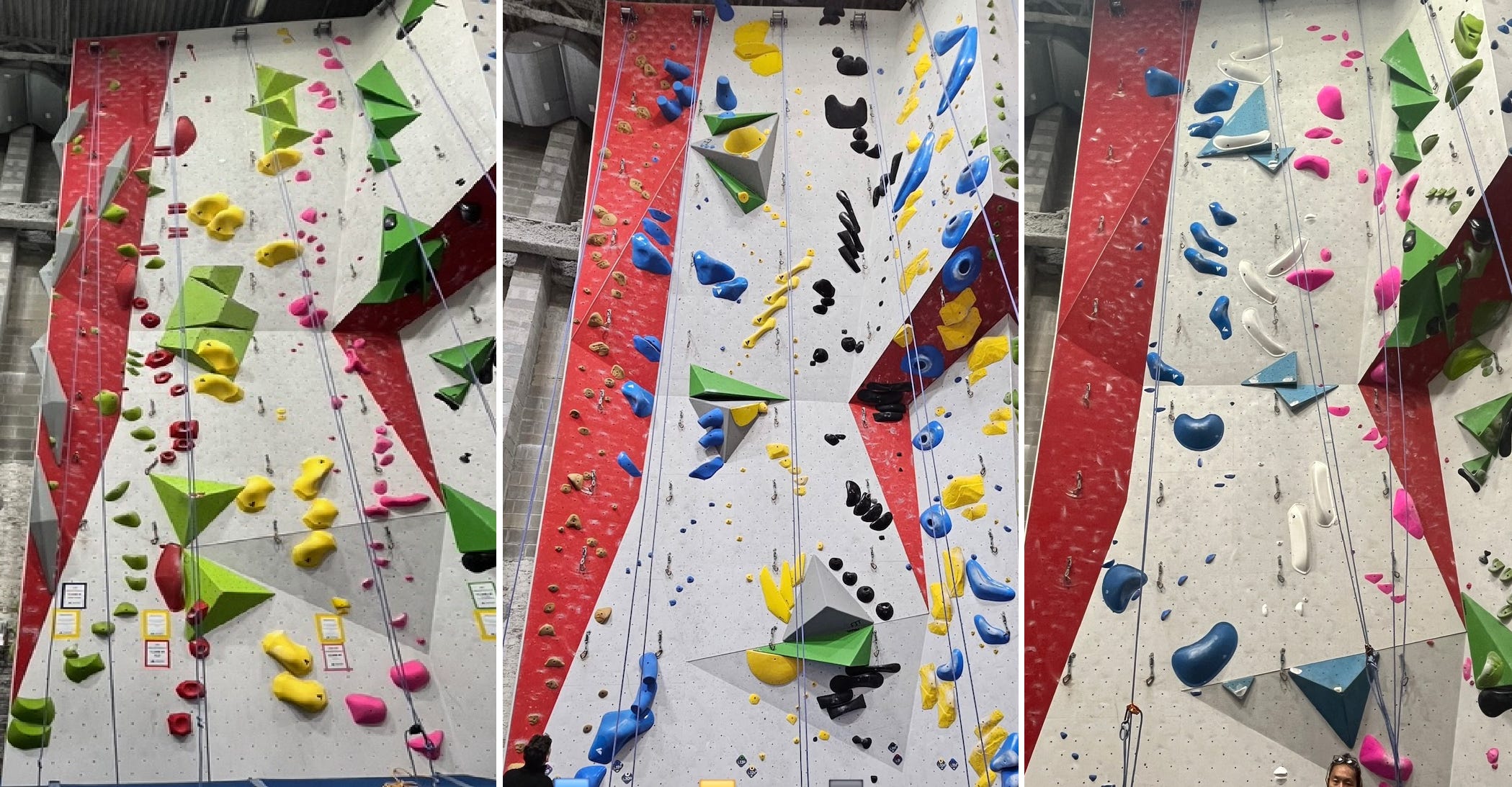
I wrote about this briefly in a previous article, but the way we section our routes is a deliberate and powerful communication tool to the climber. Most of our routes will be visibly divided into different sections. This allows us to convey a few things to the climber:
Tempo changes: Are you going to need to climb fast or slow through a section? Static or dynamic? Energy efficient or powerful? These are the decisions that make or break success on a route.
Variation in hold type: Offering consistent variation and swapping between sections of hold types throughout the route can let the climber strategize around grip types they are strong/weak in.
Resting positions: Climbers can plan out where they will be able to rest based on how the sections suit their style. A climber might opt to punch through a section they struggle with to get to a jug, while others might take a more consistent pace and be able to shake out on smaller holds
Sequencing: Deciphering beta is easier when you can break the route down into smaller parts. A 40ft wall with evenly spaced holds is harder to plan a course through than the same wall divided into 10ft sections. Overwhelming the climber can put them in a negative headspace before they even get on the wall.
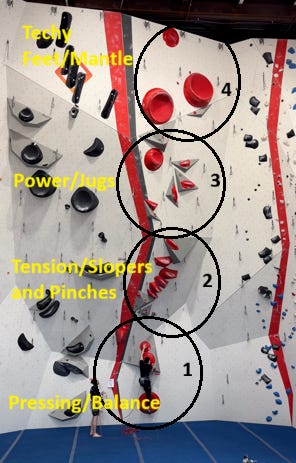
These characteristics serve as the climber’s visual guidebook. Our attention to these aspects when setting serves as direct communication when the climber interacts with the route. We don’t want to give everything away to encourage peer to peer communication, but we want to key climbers in on certain aspects so they can formulate, adjust, and execute a plan.

Equally important is it keeps the climbing interesting. The mental puzzle is just as important as the physical execution. If you are mindlessly pulling on the same size hold until you get to the top of the wall, it's likely you won’t remember anything about it or grow much as a climber. You remember the ones that gave you a challenge, not the ones that were pushovers.
Effort
Our real “secret sauce” is we put in a lot of work. It’s hard, tiring, and time consuming but it pays off. People come to LIC for the routes, and we have an obligation to uphold. However, nailing down our formula has made it easier. We are fortunate to be in a situation where our resources and quotas allow us to do this, as this isn’t the case at every gym. Routesetting and rope climbing in general, have fallen by the wayside a bit due to the higher barrier to entry. Will this trend continue as the industry keeps growing? Hard to say. I’d definitely like to see more gyms putting the spotlight on their routes.
What do you think? Is bouldering currently more in style? What type of routes do you like climbing? How can gyms emphasize their route offerings more? Sound off in the chat.

climbing gyms across the US being standardized to boulder-only facilities, especially as more open, is actually tragic :(