

Packing Tips
How dense is too dense?

6 months ago I wrote an article about how we were simplifying our boulders at LIC. While at the time it seemed like an innocuous challenge, it has transformed into something different.
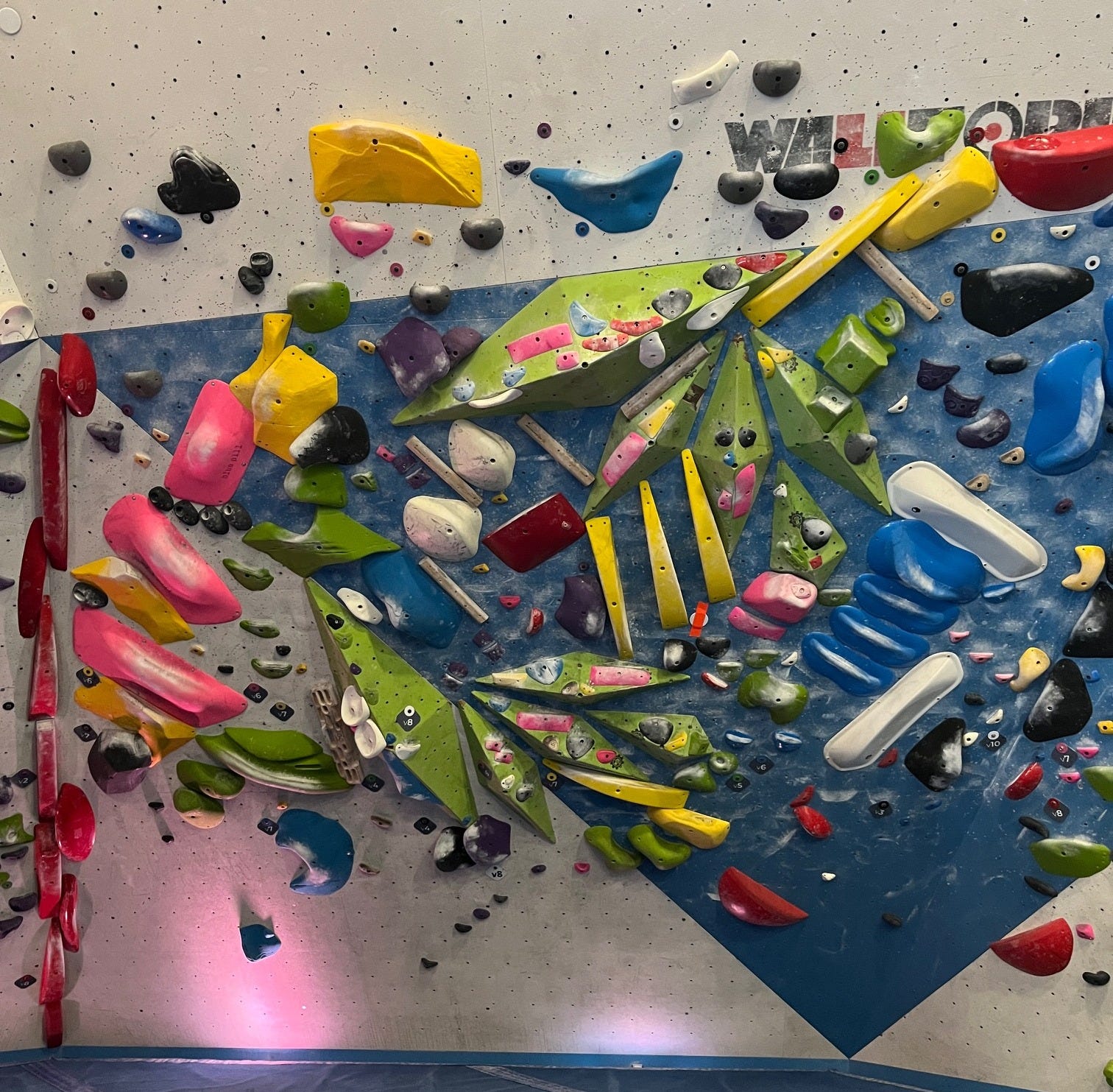
For us, simple boulders meant less holds on the wall. Less holds meant more empty space, and more empty space means…more holds on the wall? We began filling the gaps in our sets with more boulders, eventually leading us to a not new, but new to us style, of density-maxxing.
To say we have been packing it in is an understatement, we currently have 170 boulders in one of the smallest bouldering square footage imprints in NYC. An accomplishment for sure, but have we gone too far?
I want to share some insights into how we’re doing it, why we’re doing it, and what the feedback has been like.
How?
Although it looks chaotic, there is a method to the madness, and margins we have to stay in to prevent the quality of the product from being dampened.
Color Mapping:
Traditionally, we have had a color mapping that prevents conflicting color-blind colors from being too close to each other like red/pink, green/red, purple/blue. We have been exercising a bit more leniency in how close we put these colors together. We have been trying to make hold types on these adjacent boulders as distinguishable as possible when the colors are close to each other. It is impossible to achieve this type of density while adhering to a strict color map.
We still continue to map in a way that places “problem” colors farthest away from each other, but the mapping spread has become much more dense. When setting, we try to have these colors take more linear paths and not cross through each other. They can still exist adjacent.
More Colors:
We have been using an additional 4 colors (purple, grey, mango, wood) to supplement our 7 standard colors (red, pink, black, slime, yellow, white, blue). This has allowed us to fill in gaps where we might’ve not been able to fit another boulder. Most of these extra colors consist of novelty holds or leftovers that we have had from previous projects. However, they are still useful and can be good conversation starters (see if you can spot some of them in the photos).
I am looking to order another color this year. Originally this was going to be teal, which would’ve been ideal from a color mapping perspective, but it is now looking like it is going to be purple. We used to use purple many years ago and have almost phased it out due to many of the holds being outdated and not fun to climb on or set with. Purple would be “re-introduced” for boulders only as a filler color with holds that serve the v4-v8 range. This range is a sweet spot for many of our clientele. Teal is going to be implemented for a different use.
Splits:
A simple tactic that has proven very effective; have boulders of the same color start or end on a shared hold. Things can get pretty tight, and leaning into sharing starts of finishes alleviates some pressure for space. This is reminiscent of when gyms used to use tape, but it worked then and it still works now. This can also offer some visually pleasing arcs and throughlines.
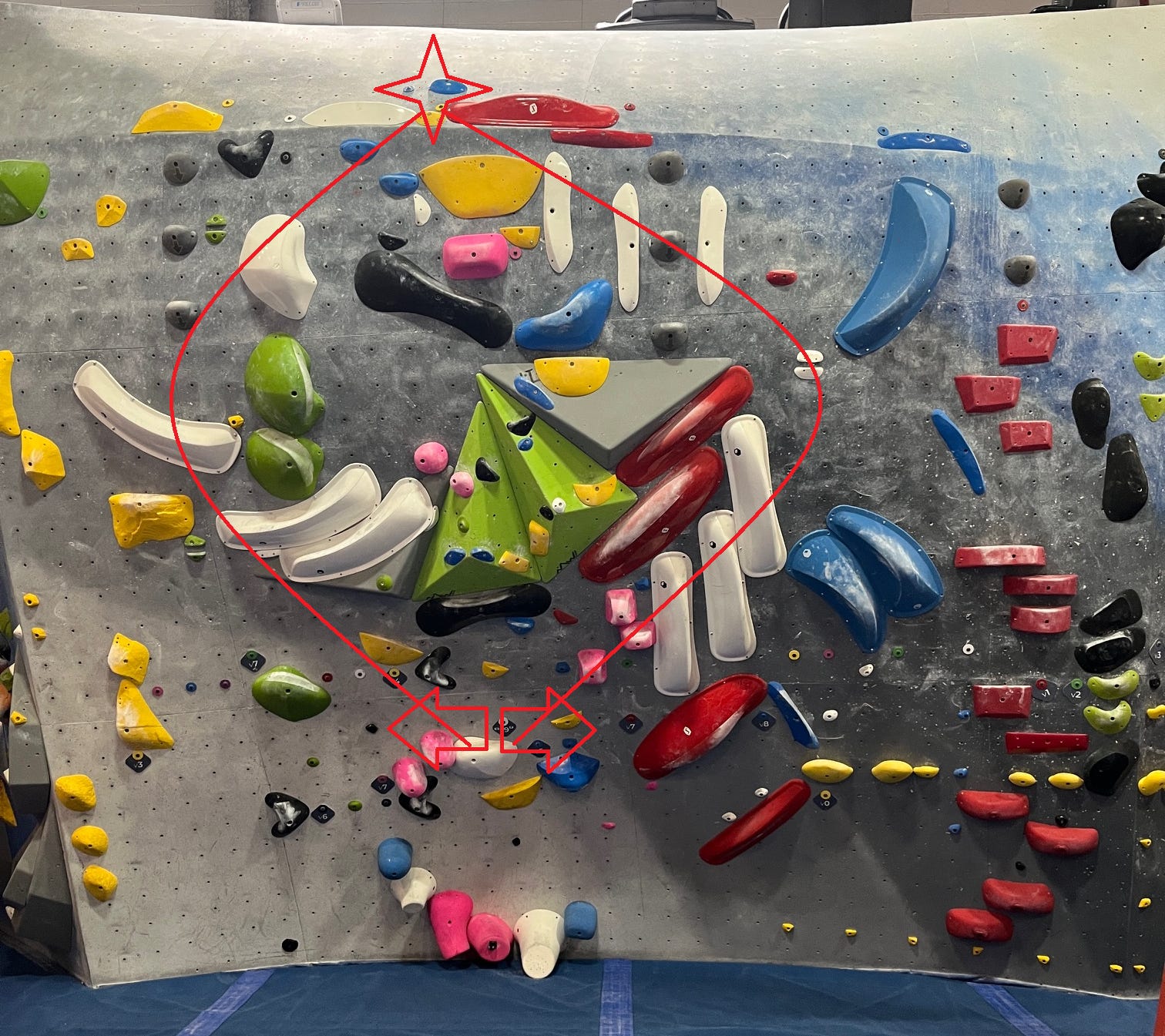
Less often we will set a “true” split, where boulders of the same color join halfway through, usually having different intro moves. I think this one inherently has less value as you are climbing the same section of the boulder on “different” climbs.
Hold Profile:
This has been the biggest learning curve in our density-maxxing journey. Large profile holds (this usually pertains more to depth), can throw off the feeling of the set. If you are dodging holds from a neighboring boulder to get to the next hold on yours, regardless of how dense the wall is, the experience changes. You want to be thinking about climbing, not completing an obstacle course.
We have been trying to pick a hold to be our largest profile hold before we begin setting. This creates consistency in hold size across the set and helps to prevent one hold from getting in the way of 4 boulders around it. There are exceptions that are made for this rule, but it mostly consists of the supersized holds being low or high on the wall.
This has made me much more aware of the value of certain hold types, especially lower profile high footprint fiberglass holds like the Floating Points, Bluepill Fiber-impressions or Secret Comp Series.
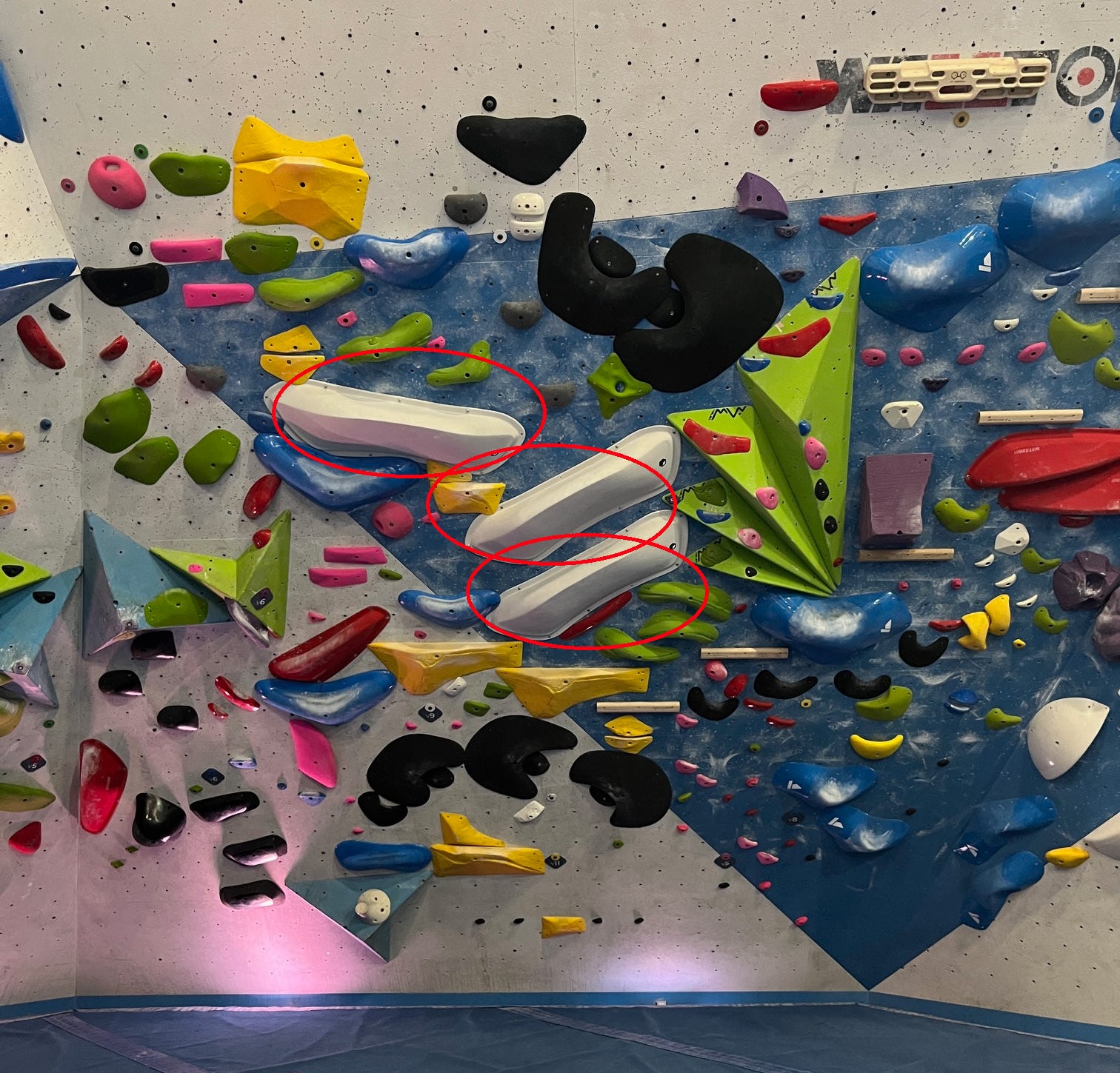
Setting:
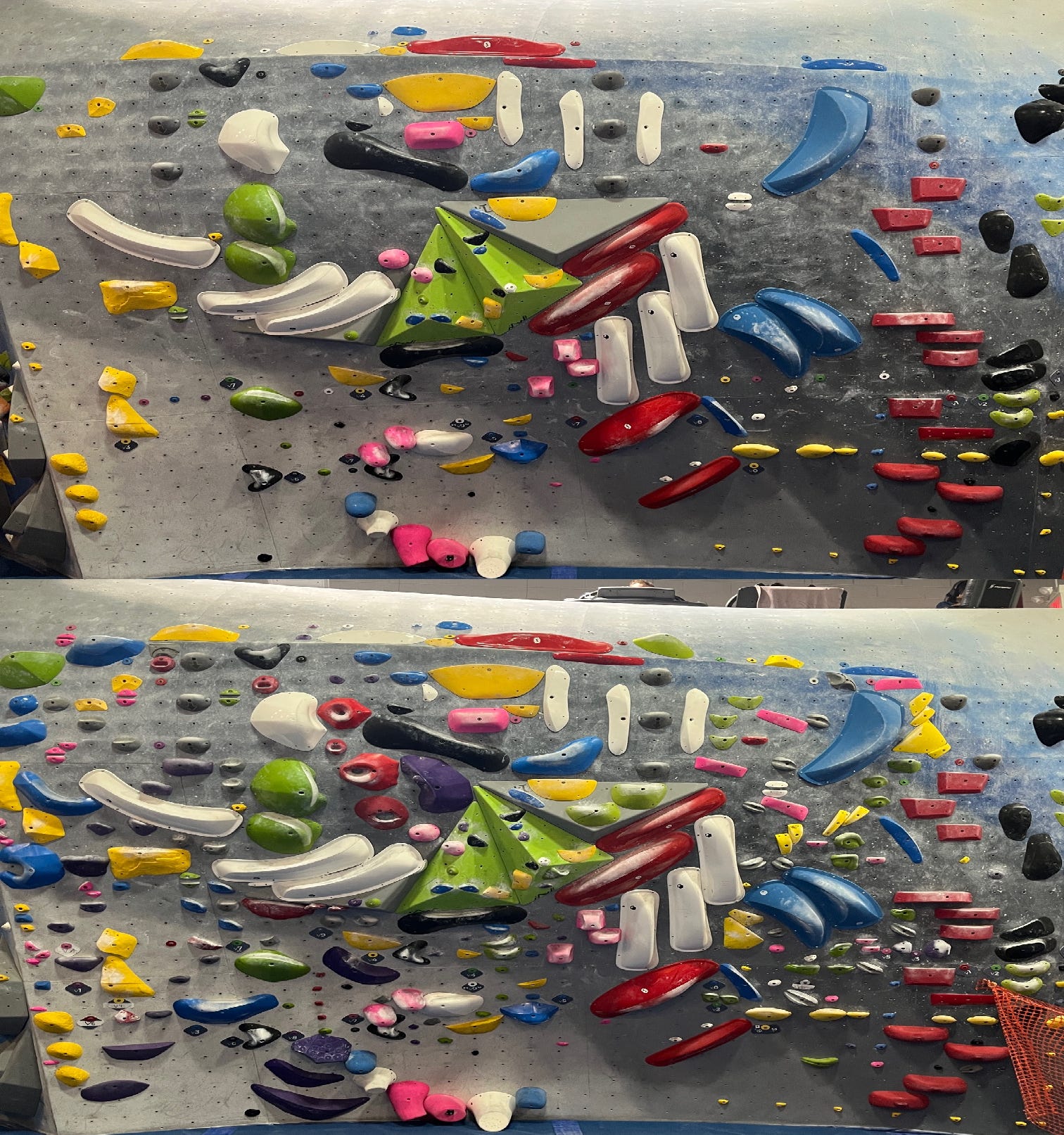
Simplicity is king. We are setting a lot of boulders, with zones often getting 25-35 total boulders. Forerunning is easy when you’re not trying to reinvent the wheel. This has kept a slightly higher forerunning quota manageable. I feel that we are putting up quality, repeatable boulders. However, this does leave less room for experimental movement. We have been slowly introducing more “new school” style movement in these density-maxxed sets to varying degrees of success. We are still working on this one.
Empty space dictates movement. When you are trying to fill as much of the wall as possible, the lines to follow become more defined. Filling in the gaps keeps movement unique, and keeps us resourceful in our solutions. A few of our favorite boulders were born out of a squeezed lane.
Why?
After mulling this over it’s come down to two reasons.
We are a non-modern gym trying to offer a modern product. LIC is entering its 12th year of existence, and many of the climbing facets of the gym are outdated. Fiberglass walls, questionable wall colors, and an inclination towards steep terrain have become things of the past in newer gym designs. For a long time we have been trying to produce modern routesetting in a non-modern space. This task hasn’t proved to be impossible, but it has felt more constricting to force the space to fit a climbing style it wasn’t designed for. Volume heavy boulders can often kill a large portion of a zone, and modern-style foot coordination is a tall order due to our only “slab” panel being 20 feet. We can do it, but it’s forced.
Most gyms have moved away from super high density. This is because most new spaces don’t necessitate any need for this. Bouldering gyms accounted for over 70% of new gym growth in 2024 according to CBJ. I would wager a guess that a majority of these gyms have double, if not triple the amount of bouldering space of LIC. This has changed the format of setting to a more sprawling landscape, which I think is better. However, we view this as an opportunity to differentiate ourselves in a market that is beginning to look overwhelmingly the same in terms of options. I recently discovered a quote emblazoned on the landing page of Arrowhead Game Studios (developer of Helldivers) website reading “A game for everyone, is a game for no one.”
As we are an older gym in a highly competitive area, it’s paramount to offer a distinct setting experience. Density might not be for everyone, but it has to be for someone.
Feedback
Do people like it? So far the response has been overwhelmingly positive, but no system is perfect.
Pros:
“I have so many options!” This has been the most common response, and the one that I think about the most. While we do love providing options and giving people multiple things to work on in different styles, I do think the boulders we are providing, from a routesetting perspective, are slightly lower quality than the ones we provided when the gym was at lower density. There is a discussion to be had about where the diminishing returns are met with climber experience and how much time we put into setting/forerunning a boulder, but the short of it is that it’s something I think about now more than ever. Right now, I do feel that climbers value more options which raises their potential success rate than fewer options that require multiple sessions to decipher.
“The walls look dense.” A picture is worth a thousand words, and your first view of a boulder set is worth a few. If a climber sees a lot on the wall, they will be attracted to it. They want to see what’s new, what’s for them, what’s for their friends, and what they can work towards. The walls at LIC right now for lack of a better word look crazy, some of them look like you wouldn’t be able to fit another boulder on it if you tried. For some, density equals value, “If I have a lot of options, wouldn’t I keep coming back?”.
“Hey, have you tried that one yet?” It has become hard to find, or climb every boulder in your range on your first visit to the new set. From fly on the wall viewing to participating in a session, this conversation has come up more often than ever, which restores a bit of the community aspect that has been fading in climbing gyms. It’s a special feeling to guide and work with someone on something they haven’t tried before.
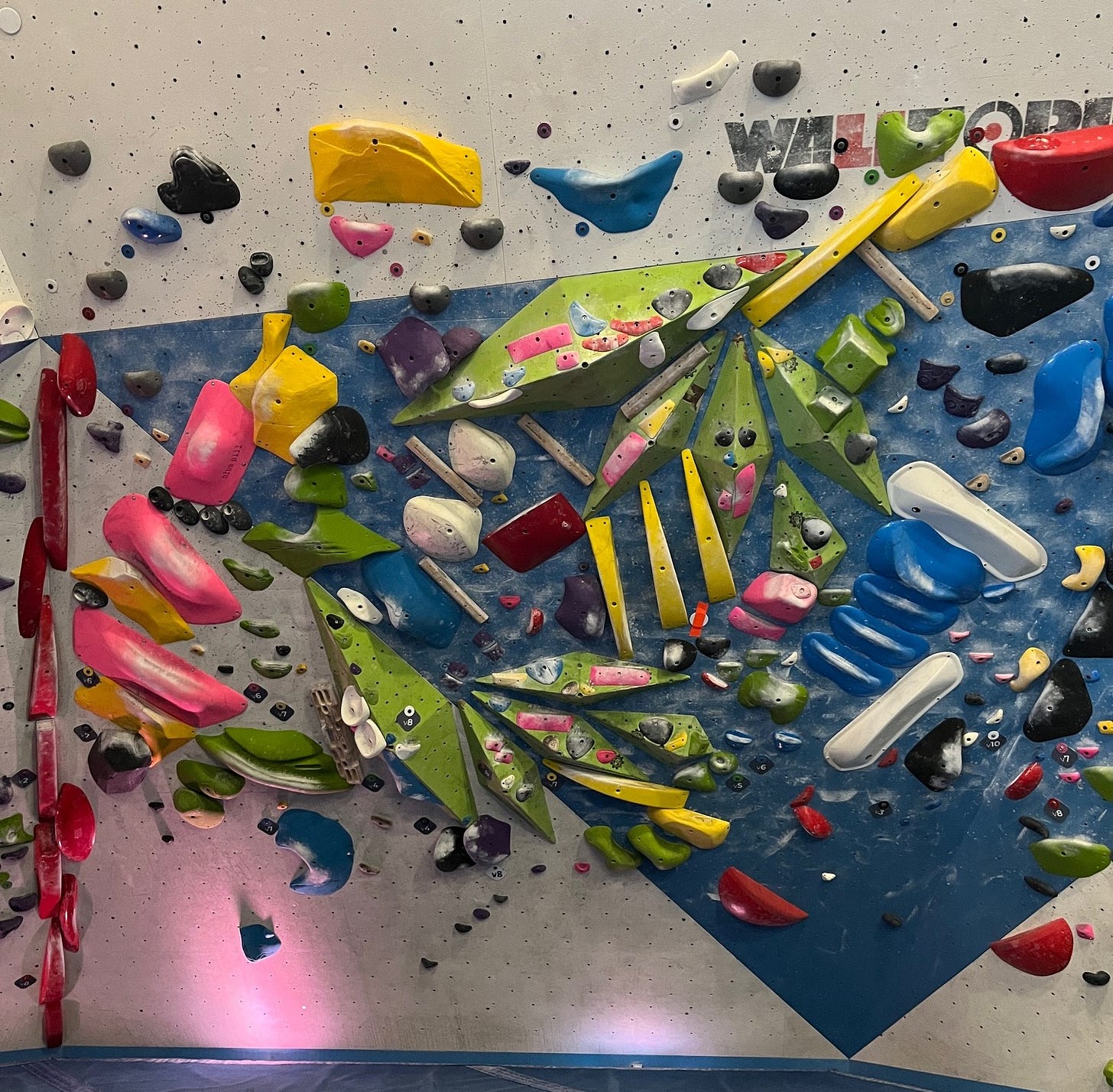
Our current 45 set. “The rotation is fast!” At the beginning of last year, my assistant manager Hans, had the idea to change up the boulder zones/rotation. This effectively made every zone bigger, but we set boulders over the course of 3 days, splitting the team between ropes and boulders. We have made some modifications to this since but it has largely stayed the same. This has put our rotation (excluding our upstairs boulder mezzanine) at roughly 5 weeks. Initially we were doing it in 4 but this was a bit too fast.
Cons
“I had to dodge that hold.” Common, unavoidable, but controllable. This has been a bit of a learning curve for us as to where we can be putting larger holds to not interfere with the climbing experience. As mentioned in the hold profile section we have been opting for lower depth holds and trying to be highly aware of where large features and volumes are ending up on the wall. However, there will always be some element of this that comes with the territory. In my own climbing sessions, I usually have the most frustration with having a hard time finding places to smear on the wall. I think this is something we have room to improve on.
“Is this sustainable?” I’m not really sure. Right now it feels sustainable from a setting and forerunning standpoint because we usually cycle out members of our team on the boulders each day, so no one is setting boulders two days in a row. Some of the filler days can be difficult with 5-7 boulders per-setter going up, but the limited canvas usually airs toward the side of simplicity. We have been doing this for 5-6 months and haven’t noticed a huge shift in overall workload, but this could change depending on how we skew our grade spread.
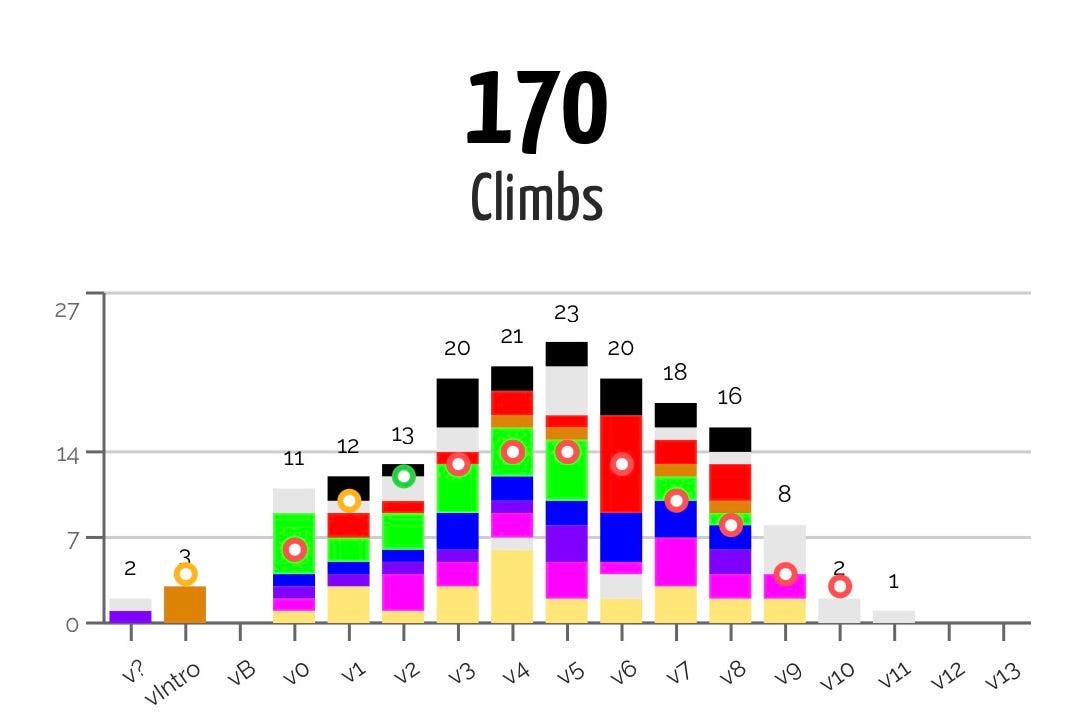
“Are we setting a standard we can’t go back on?” I feel that we have always set high standards to uphold in LIC. Would it be shocking to go back down to 120 boulders? Definitely. Is it more likely for us to fluctuate between 140 and 160? Probably. The numbers have changed quite a bit per-rotation over the past few months and we haven’t noticed a drastic difference in climber perception. I think what we have right now is especially high, but if a few boulders were missing no one would bat an eye.
I think it’s important to note that this is a snapshot of how we’re feeling/doing things in the current moment. The setting at LIC has gone through many phases, and this is the current one in the cycle. It’s not better or worse than what anyone else is doing, it’s just different. If you asked me how I felt about this hyper-density a year ago I probably would’ve had a much different outlook on it. However, a zig while others are zagging feels empowering.
What do you think? Are you a fan of density-maxxing? Do you like having more choices? Do you want a small batch curated climbing experience? Sound off in the chat!
Until next time.
This is a free publication, if you’d like to support check out the shop!

Solid breakdown of the tradeoffs between density and experience quality. The insight about simplified routes being easier to forrun at scale is somthing that applies way beyond climbing - seen similar constraints in software architecture where you need high throughput but limited complexity budget. The Helldivers quote captures it perfectly. Leaning into constraints as differentiation rather than fighting them feels like actualy strategy instead of cope.
I would argue that the so-called outdated purple holds are the *most* fun to climb on